How Wireless Power Works: A Beginner's Guide
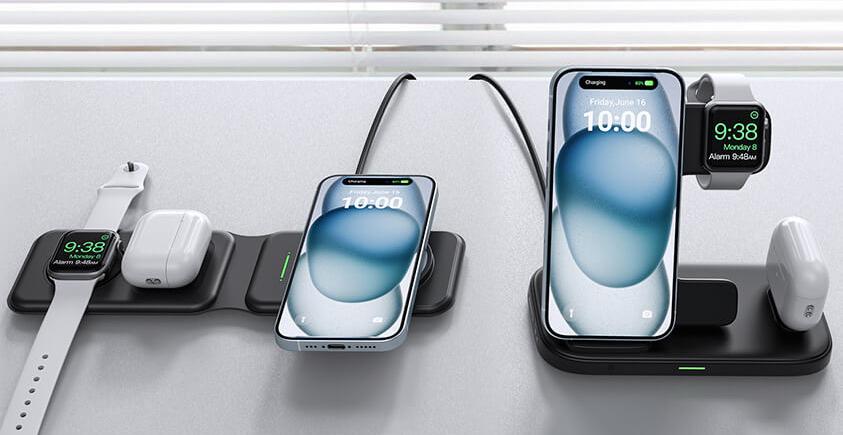
Wireless power, a fascinating technology that eliminates the need for bulky wires, operates on the principle of electromagnetic induction. This process involves the transfer of energy from a power source to a device through the use of magnetic fields. To understand how it works, we can break it down into two main components: the transmitter and the receiver. The transmitter creates an alternating magnetic field, which is then picked up by the receiver. This receiver, often embedded in devices like smartphones and electric toothbrushes, converts the magnetic energy back into electrical energy to power the device.
The concept of wireless power transmission can be traced back to the experiments of Nikola Tesla in the late 19th century. However, it has become more prominent in recent years due to the rise of consumer electronics. There are primarily two methods of wireless charging: magnetic resonance and inductive charging. Inductive charging, commonly used in devices like Qi chargers, relies on close alignment between the transmitter and receiver. On the other hand, magnetic resonance allows for a bit of distance, enabling the powering of multiple devices within a certain range. As technology advances, the potential applications for wireless power could expand, revolutionizing how we charge our devices.
Counter-Strike is a popular multiplayer first-person shooter game that pits teams of terrorists against counter-terrorists in various game modes. With its tactical gameplay and emphasis on teamwork, Counter-Strike has become a staple in the eSports community. If you're looking for the best products for your gaming setup, check out the Top 10 magsafe chargers to enhance your gaming experience.
The Future of Charging: Benefits and Challenges of Wireless Power
The advent of wireless power technology promises to transform how we charge our devices, offering significant benefits such as convenience and ease of use. Imagine a world where your smartphone or electric vehicle charges automatically when you enter a designated area, eliminating the hassle of tangled wires and inconsistent charging ports. Furthermore, this technology enhances safety by reducing the risk of electrical shocks and wear-and-tear associated with traditional charging cables. Additionally, as wireless charging mats and stations become more prevalent in public spaces, the ease of keeping our devices charged on the go will contribute to a seamless user experience.
However, the transition to a fully wireless power ecosystem is not without its challenges. One major concern is efficiency; current wireless charging systems often have lower energy transfer rates compared to wired solutions, which can lead to longer charging times. Furthermore, the need for compatible devices and infrastructure presents another hurdle that must be addressed to ensure widespread adoption. As innovations continue to emerge, addressing these challenges will be crucial for the successful integration of wireless charging into our daily lives, enabling us to harness its full potential.
Is Wireless Charging Right for You? Here’s What You Need to Know
As technology continues to evolve, wireless charging has become a convenient option for keeping our devices powered up. But is wireless charging right for you? To answer this question, consider the pros and cons of this technology. On one hand, wireless chargers eliminate the need for cables, making it easier to power up your smartphone or other compatible devices without the hassle of plugging and unplugging cables. On the other hand, the charging speed may be slower compared to traditional wired charging methods. If you often find yourself in a hurry, this could be a significant factor in your decision-making process.
Additionally, you should assess the compatibility of your devices with wireless charging. Most modern smartphones are equipped with this feature, but older models may not support it. Wireless charging typically uses the Qi standard, which is widely adopted, but it's essential to check if your device is compatible before making a purchase. Furthermore, consider the charging pad's design and portability. If you travel frequently, a compact and lightweight model might be preferable. Ultimately, evaluating your lifestyle and charging habits will guide you in deciding whether wireless charging is a practical choice for you.